Hiking can be a valuable activity in recovery because it supports both the body and the mind. It gets people moving, brings them outdoors, and gives them a clear, manageable goal to work toward. For someone in early recovery, that combination can be especially helpful.
On a hike, progress is easy to see. You keep going, adjust when the trail gets harder, and eventually reach a point you set out to reach. That process can build confidence, reduce stress, and help people reconnect with their bodies in a healthy way. It also creates space to slow down and focus on what’s happening right now, which can be an important part of learning how to stay grounded in recovery.
At Kona Sober Living, getting outdoors is a natural part of the recovery experience. Residents have access to a private hiking trail on our property with beautiful ocean and mountain views, along with opportunities to explore many of the Big Island’s well-known trails. Here’s why hiking can be such a valuable way to support sobriety.
What Hiking Does for the Recovering Brain
Addiction changes the brain, particularly the systems responsible for dopamine, motivation, and reward. One of the challenges of early recovery is that the brain’s reward system has been recalibrated around substances, which means everyday activities can feel flat or unrewarding for a while.
Physical exercise, including hiking, is one of the most effective natural ways to support dopamine and serotonin production. Regular movement helps restore the brain’s reward pathways over time, making it easier to experience pleasure, motivation, and satisfaction from everyday life.
Hiking also reduces cortisol, the stress hormone that plays a significant role in cravings and emotional dysregulation. Lower cortisol means a calmer nervous system, better sleep, and a greater capacity to handle the difficult moments that come up in recovery.
The Mental Health Benefits Go Beyond the Physical
The mental health benefits of spending time in nature are well documented. Anxiety decreases. Rumination, the loop of repetitive, often negative thinking that many people in recovery struggle with, is interrupted by the sensory demands of being outside and moving through a natural environment. Your brain simply has less bandwidth for spiraling when it’s also tracking a trail, adjusting to uneven terrain, and taking in what’s around it.
There’s also something that happens psychologically when you set out to do something hard and finish it. Hiking asks you to keep going when your legs are tired and the end isn’t in sight yet. That’s not just physical conditioning but practicing the same kind of persistence that recovery requires. Every trail completed is a small but real reminder that you can do hard things.
Hiking as a Mindfulness Practice
Mindfulness is the practice of staying present in the current moment rather than getting pulled into the past or future. It’s a cornerstone of most recovery approaches, but it’s also something that a lot of people find difficult to do.
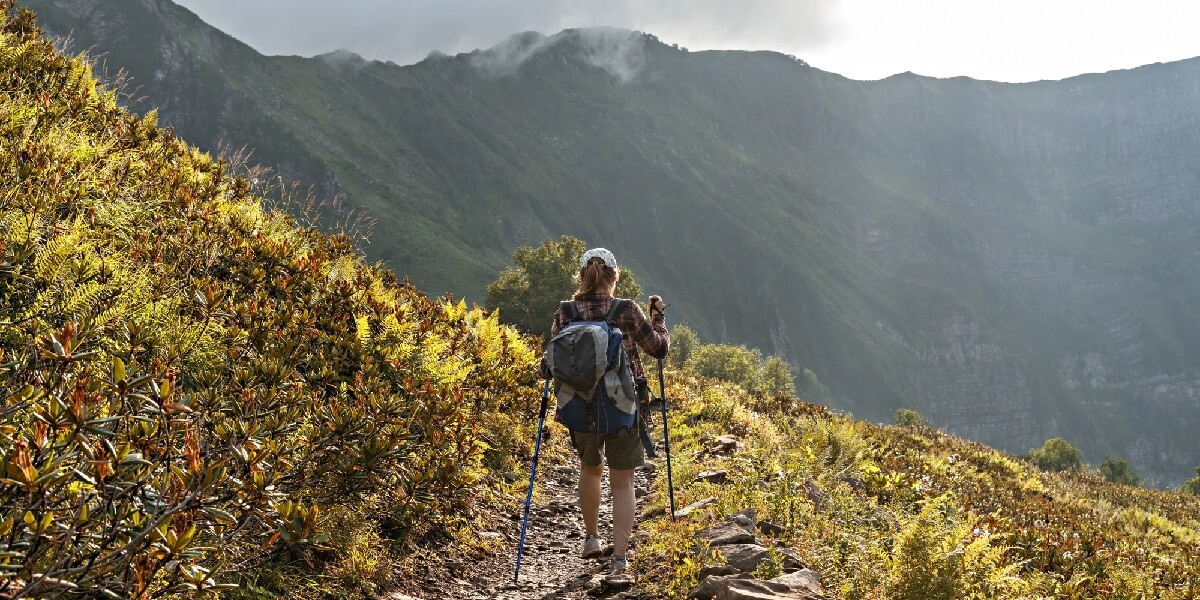
Hiking is mindfulness in motion. When you’re on a trail, the present moment is right there in front of you: the next step, the next breath, the shift in terrain underfoot. You notice the light through the trees, the sound of wind, the way the air changes with elevation. That quality of attention is exactly what mindfulness is trying to develop. For people who struggle to meditate in a traditional sense, hiking often comes naturally.
Hiking at Kona Sober Living
At Kona Sober Living, residents don’t have to plan a trip or drive somewhere to get on a trail. We have our own hiking trail right on the property, and it offers something that’s hard to find even in Hawaiʻi: sweeping views of both the ocean and the mountains from a single vantage point.
That matters more than it might sound. Having a trail this accessible means hiking can become a daily practice rather than an occasional outing. Residents can go out in the morning before the day starts, walk in the evening when they need to reset, or head out with a housemate when they need connection and fresh air. The trail is always there.
There’s something powerful about being surrounded by that kind of view. With the ocean in one direction, the mountains in another, and open sky above, it becomes easier to step outside the thoughts or worries that felt so overwhelming a few moments before. The setting offers perspective in a very real way.
For residents in recovery, that perspective can matter. A difficult day may not disappear, but it can start to feel more manageable. The view is a reminder that there is more around you than the hard moment you are in. That is one reason place matters so much in recovery, and why the natural setting at Kona Sober Living is such an important part of the experience.
Getting Started Is Enough
You don’t need to be an experienced hiker to benefit from time on a trail. You don’t need gear, a fitness baseline, or any particular level of physical condition. You just need to start walking. The benefits begin from the first step, and they build over time as hiking becomes a regular part of your routine.
For people in early recovery who are looking for healthy ways to fill time, manage stress, and reconnect with their bodies, hiking is one of the simplest and most effective tools available. In Kona, with a trail right outside the door and the Pacific in the distance, it’s also one of the most beautiful.
If you’d like to learn more about life at Kona Sober Living and what a typical day looks like for our residents, we’d love to talk. Call (808) 229-5413 or fill out our online contact form to connect with the Kona Sober Living team.